Enhance friction: By increasing the coefficient of friction between the conveyor belt and the roller, the conveyor belt rubber-coated pins ensure that the material can move smoothly during the transmission process, preventing slippage and deflection phenomenon from occurring.
Preventing slippage and deflection: The surface of the roller without rubber coating is smooth and the friction is small, which will easily cause the conveyor belt to slip and deflect. After the roller is covered with rubber, the friction coefficient between the rubber layer and the conveyor belt increases, which can effectively prevent this phenomenon and ensure the stability and continuity of material transmission.
Protection of conveyor belt and roller: rubber coating can absorb part of the vibration energy, reduce noise and vibration, so as to protect the conveyor belt and roller and prolong its service life.
Extend the service life: the rubber-coated layer can effectively resist abrasion and corrosion, especially when dealing with corrosive materials, the protective effect of rubber-coated rollers is more obvious, thus extending the service life of the rollers.
These roles make the conveyor belt overlay pins play an important role in the material transfer system, to ensure the stable operation of the system and efficient transmission.


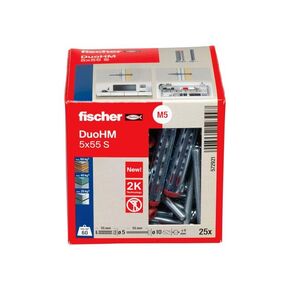 fischer Cavity Fastening DuoHM 3/16" x 2 3/16" (5x55mm) S PH TX, Panhead Screw, TX-Drive 25pcs Screws 25pcs Plugs for Fixing TV Brackets, Lights, Wall Shelves, Panel Building Materials
KWD 6.500
fischer Cavity Fastening DuoHM 3/16" x 2 3/16" (5x55mm) S PH TX, Panhead Screw, TX-Drive 25pcs Screws 25pcs Plugs for Fixing TV Brackets, Lights, Wall Shelves, Panel Building Materials
KWD 6.500
 meite 1/2" and 3/8" T50 Stainless Steel Staples (1512 PCS Per Size), Heavy Duty T50 Staples for Staple Gun, T50 Staple Gun Staples, 20 Gauge 3/8 Inch Crown Upholstery Staples
KWD 9.500
meite 1/2" and 3/8" T50 Stainless Steel Staples (1512 PCS Per Size), Heavy Duty T50 Staples for Staple Gun, T50 Staple Gun Staples, 20 Gauge 3/8 Inch Crown Upholstery Staples
KWD 9.500
 Generic 24Pc 7/16-20 Chrome Bulge Acorn Lug Nuts for Chevy GMC Blazer K10 K5 V1500 7/16
KWD 11
Generic 24Pc 7/16-20 Chrome Bulge Acorn Lug Nuts for Chevy GMC Blazer K10 K5 V1500 7/16
KWD 11
 Hillman 14 Ga. x 3/4 in. L Brass-Plated Steel Escutcheon Pins 1 pk 1.5 oz.
KWD 5.500
Hillman 14 Ga. x 3/4 in. L Brass-Plated Steel Escutcheon Pins 1 pk 1.5 oz.
KWD 5.500