12 Pcs Back Probe Kit with 4mm Banana Socket, 0.7mm Non-Destructive Wire Piercing Test Probe Pins, Automotive Circuit Tester and Multimeter Leads for Car Relay Testing and Circuit Breaker Find
Non-destructive Testing Design: These back probes feature precision-designed 0.7 mm stainless steel tips that easily pierce wire insulation for electrical measurements without compromising conductor integrity or wire safety. Their unique tip design enables seamless back probe testing of automotive connectors and wiring harnesses while maintaining circuit functionality during diagnostics
Universal Compatibility: These back probes feature a standard 4 mm banana plug design, allowing seamless integration with most multimeters, automotive testers, circuit analyzers, and diagnostic equipment on the market. The universal connection system ensures reliable electrical contact while allowing for quick interchange between different test devices without adapters or modifications
Construction Materials: Constructed from high-quality stainless steel, these probes feature precision-machined tips and an insulated PA plastic housing, allowing them to withstand daily use in harsh automotive and industrial environments. The robust stainless steel construction ensures the probes maintain sharpness and structural integrity even after repeated use
Wide Range of Applications: These versatile back probe kits are essential tools for automotive diagnostics, enabling the testing of sensors, relays, control modules, wiring harnesses, and circuits without disconnecting components or damaging wiring. They are ideal for troubleshooting electrical faults in automotive, truck, motorcycle, marine engines, and industrial equipment
Kit Specifications: This professional 12-piece back probe kit includes six red and six black test probes with 0.7mm stainless steel piercing needles, approximately 2.0cm long, for a total length of approximately 8.4cm. Precision-manufactured probes ensure consistent performance across all probes, and color-coded insulation facilitates easy polarity identification during complex testing processes
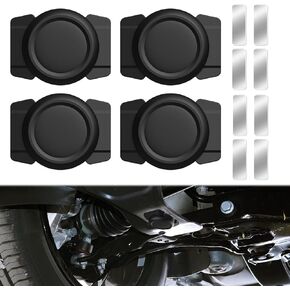 4Pcs Hidden Magnetic Airtag Holder, Black Silicone Convenient Find Quickly Anti-Loss Airtag Case with Self-Adhesive Metal Sheet Suitable for Laptop Car Bike Metal Surfaces
KWD 6.500
4Pcs Hidden Magnetic Airtag Holder, Black Silicone Convenient Find Quickly Anti-Loss Airtag Case with Self-Adhesive Metal Sheet Suitable for Laptop Car Bike Metal Surfaces
KWD 6.500
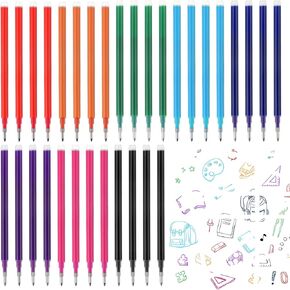 32Pcs 0.7 mm Erasable Gel Ink Pen Refills Compatible with Frixion Friction, 8 Colors Retractable Fine Point Pen Refill (Blue、Black、Red、Green、Orange、Lake Blue、Purple、Rose Red) (8Color, 32)
KWD 7.500
32Pcs 0.7 mm Erasable Gel Ink Pen Refills Compatible with Frixion Friction, 8 Colors Retractable Fine Point Pen Refill (Blue、Black、Red、Green、Orange、Lake Blue、Purple、Rose Red) (8Color, 32)
KWD 7.500
 4 Pcs Magnetic Remote Control Holder, 38in Security Cable & 5lb Force, Organizer Easy Installation Stable Multi-Device Use for Families with Kids to Keep TV-Fan-AC Remotes Tidy and Anti-Loss
KWD 7
4 Pcs Magnetic Remote Control Holder, 38in Security Cable & 5lb Force, Organizer Easy Installation Stable Multi-Device Use for Families with Kids to Keep TV-Fan-AC Remotes Tidy and Anti-Loss
KWD 7
 -40%
12Pcs 3 Sizes Double Opening Necklace Bracelet Shortener, Lobster Jewelry Clasp and Closures Gold and Silver Clip Connectors for Jewelry Making Bracelets Connector Clips (Small & Large)
KWD 3
-40%
12Pcs 3 Sizes Double Opening Necklace Bracelet Shortener, Lobster Jewelry Clasp and Closures Gold and Silver Clip Connectors for Jewelry Making Bracelets Connector Clips (Small & Large)
KWD 3