- Shopping, made easy.
- /
- Get the app!
Why Replace Battery Hookup Clips?
Even the best clips can deteriorate over time and with use. Using damaged or worn clips can be more dangerous than not using any at all. Replace them immediately if you observe any of the following:
1.Insufficient Clamping Force
Signs: The clip cannot grip the battery terminals tightly and detaches easily with a light pull.
Poor Contact: Leads to inaccurate voltage readings and intermittent connections, which can result in misdiagnosis of issues.
2.Cracked or Melted Insulation
Signs: Cracks, chips, or deformation due to overheating on the plastic or rubber handles of the clip.
Electric Shock Risk: Although the voltage in vehicles is not high, damaged insulation may expose the metal parts, posing a risk of accidental contact. In certain conditions (e.g., when the vehicle body is damp), this could still be hazardous.
Short Circuit Risk: Exposed metal parts can easily come into contact with the metal body of the vehicle (grounding), causing a short circuit that may blow fuses or damage the vehicle's ECU.
3.Severe Corrosion or Oxidation on the Metal Clamp Head
Signs: The metal part of the clip is covered with white or green corrosion or has turned black.
Risks: Corrosion forms a high-resistance layer that significantly impedes current flow, leading to voltage drops and severely inaccurate test results. For example, you might measure the battery voltage as 12.6V, but due to the clip, only 11V reaches the circuit end, misleading your diagnosis.
4.Deformed or Broken Metal Clamp Head
Signs: The "alligator teeth" of the clip are bent, broken, or unable to close properly.
Risks: Unable to establish a reliable connection, rendering the clip completely useless. Replacement is necessary.
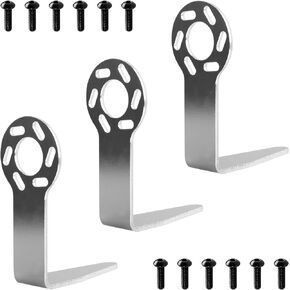 QQZ 889661M Rafter Hook for Metabo HPT Tools, also for Hitachi, Distance from Screw Hole to Center Point 1.5"to 1.9"Aluminum -3 Pcs
KWD 7
QQZ 889661M Rafter Hook for Metabo HPT Tools, also for Hitachi, Distance from Screw Hole to Center Point 1.5"to 1.9"Aluminum -3 Pcs
KWD 7
 QQZ Rafter Hook 889661M for Metabo HPT Tools, also for Hitachi, Distance from Screw Hole to Center Point 1.5"to 1.9"Aluminum
KWD 4
QQZ Rafter Hook 889661M for Metabo HPT Tools, also for Hitachi, Distance from Screw Hole to Center Point 1.5"to 1.9"Aluminum
KWD 4
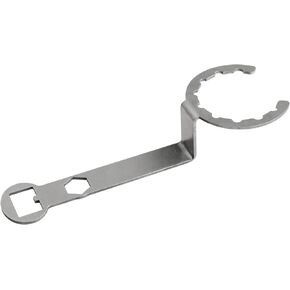 Removal Wrench 002963, for Waring CB6 CB10 CB15 Lock Nut 012008 & Blade Assembly 502977 (2 in 1)
KWD 12.500
Removal Wrench 002963, for Waring CB6 CB10 CB15 Lock Nut 012008 & Blade Assembly 502977 (2 in 1)
KWD 12.500
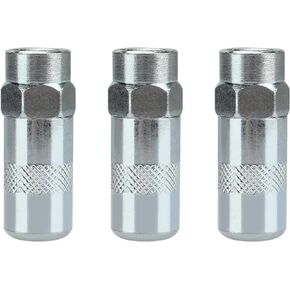 Grease Gun Coupler DCGG5701 for Dewalt Grease Gun, 1/8" NPT, High Pressure Grease Gun Coupler, Heavy Duty, -3 Pcs
KWD 4.500
Grease Gun Coupler DCGG5701 for Dewalt Grease Gun, 1/8" NPT, High Pressure Grease Gun Coupler, Heavy Duty, -3 Pcs
KWD 4.500